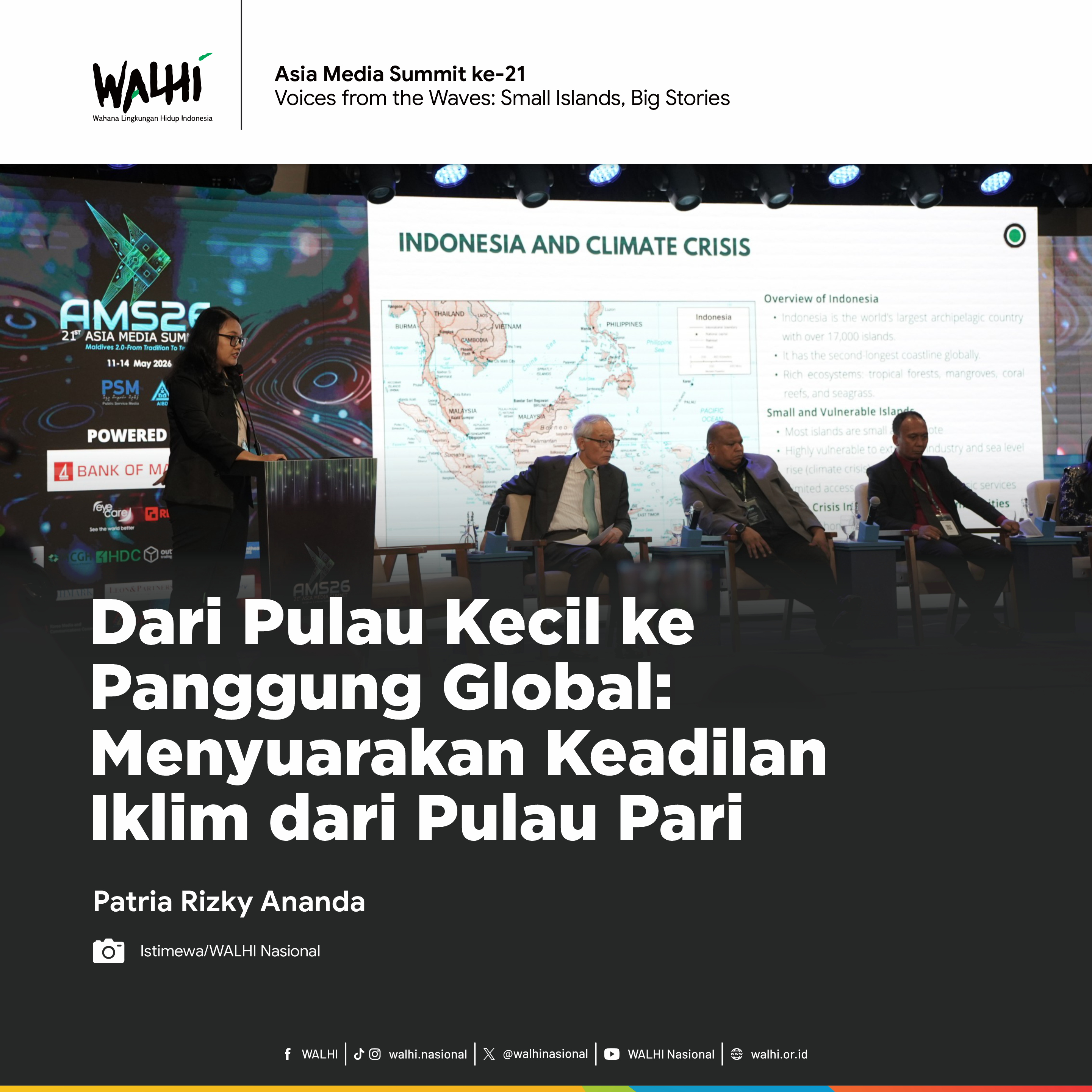
Dari Pulau Kecil ke Panggung Global: Menyuarakan Keadilan Iklim dari Pulau Pari
Asia Media Summit ke-21 | Voices from the Waves: Small Islands, Big Stories
Oleh: Patria Rizky Ananda, Pengkampanye Iklim dan Isu Global WALHI
Krisis iklim bukan persoalan yang mengenal batas negara. Emisi yang dihasilkan oleh korporasi besar di satu wilayah dapat menghadirkan bencana bagi komunitas yang hidup ribuan kilometer jauhnya. Dampaknya melintasi batas geografis, politik, dan ekonomi. Karena itu, krisis iklim harus dipahami sebagai isu lintas batas yang membutuhkan solidaritas global dan keberpihakan terhadap kelompok yang paling terdampak.
Di berbagai belahan dunia, komunitas yang tinggal di pulau-pulau kecil menjadi kelompok yang paling rentan menghadapi dampak dari krisis iklim. Kenaikan muka air laut, abrasi, cuaca ekstrem, krisis air bersih, hingga rusaknya ruang hidup dan sumber penghidupan menjadi ancaman nyata yang mereka hadapi setiap hari. Padahal, komunitas di pulau-pulau kecil bukanlah pihak yang paling banyak menghasilkan emisi karbon.
Pengalaman dari Pulau Pari
Situasi tersebut juga dialami oleh masyarakat Pulau Pari. Pada 2021, mereka mengalami banjir rob setidaknya sebanyak 6 kali, dimana 4 kali terjadi selama musim angin timur di Juli-Agustus, dan 6 kali musim angin barat pada November-Desember. Banjir rob yang terjadi pada akhir tahun merupakan banjir rob terparah yang dirasakan warga dengan ketinggian 50-150 cm.
Akibat banjir tersebut, masyarakat harus kehilangan pendapatan mereka dari pariwisata karena sejumlah wistawan membatalkan kedatangan mereka. Pariwisata menjadi salah satu pendapatan utama warga melalui penyewaan tempat tinggal, penyewaan alat selam dan perahu, retribusi tempat wisata, dan juga pembeli di warung sederhana milik warga. Sejak banjir rob yang terjadi di sepanjang 2021, wisatawan kembali ramai berdatangan pada Februari 2022. Itu artinya, warga kehilangan pendapatan mereka selama kurang lebih 3-4 bulan.
Selain itu, mereka juga tidak bisa mengakses air bersih dari sumur-sumur milik mereka karena air laut sudah masuk sehingga air menjadi asin. Akibatnya, masyarakat harus mengeluarkan uang lebih banyak untuk bisa mengakses air bersih melalui tempat-tempat penyulingan air. Mereka juga harus membersihkan rumah mereka dari sisa-sisa banjir yang terpaksa membuat mereka berhenti melaut selama 2-3 hari.
Pasca banjir rob yang terjadi pada 2021, intensitas banjir rob dan cuaca ekstrem semakin sering dialami warga. Bagi masyarakat pulau Pari, krisis iklim bukan lagi ancaman di masa depan, melainkan kenyataan yang telah merusak ruang hidup dan berdampak buruk bagi mereka dalam beberapa tahun terakhir. Kenyataan ini tentunya tidak membuat masyarakat pulau Pari diam begitu saja, mereka justru berjuang menuntut hak atas rasa aman dan atas lingkungan hidup yang baik dan sehat. Mereka sadar bahwa keadilan iklim juga merupakan bagian dari hak atas lingkungan hidup yang baik dan sehat. Sehingga menuntut pertanggungjawaban pihak-pihak yang selama ini memperoleh keuntungan besar diatas perampasan hak mereka adalah tindakan yang harus dilakukan.
Pada 2023 masyarakat Pulau Pari mengambil langkah bersejarah dengan mengajukan gugatan terhadap Holcim sebagai salah satu perusahaan dengan kontribusi emisi karbon tinggi di dunia. Gugatan ini menjadi simbol perjuangan masyarakat di tingkat tapak untuk menuntut tanggung jawab korporasi atas dampak nyata krisis iklim yang mereka alami. Gugatan tersebut juga menunjukkan bahwa komunitas terdampak tidak tinggal diam menghadapi ketidakadilan iklim global.
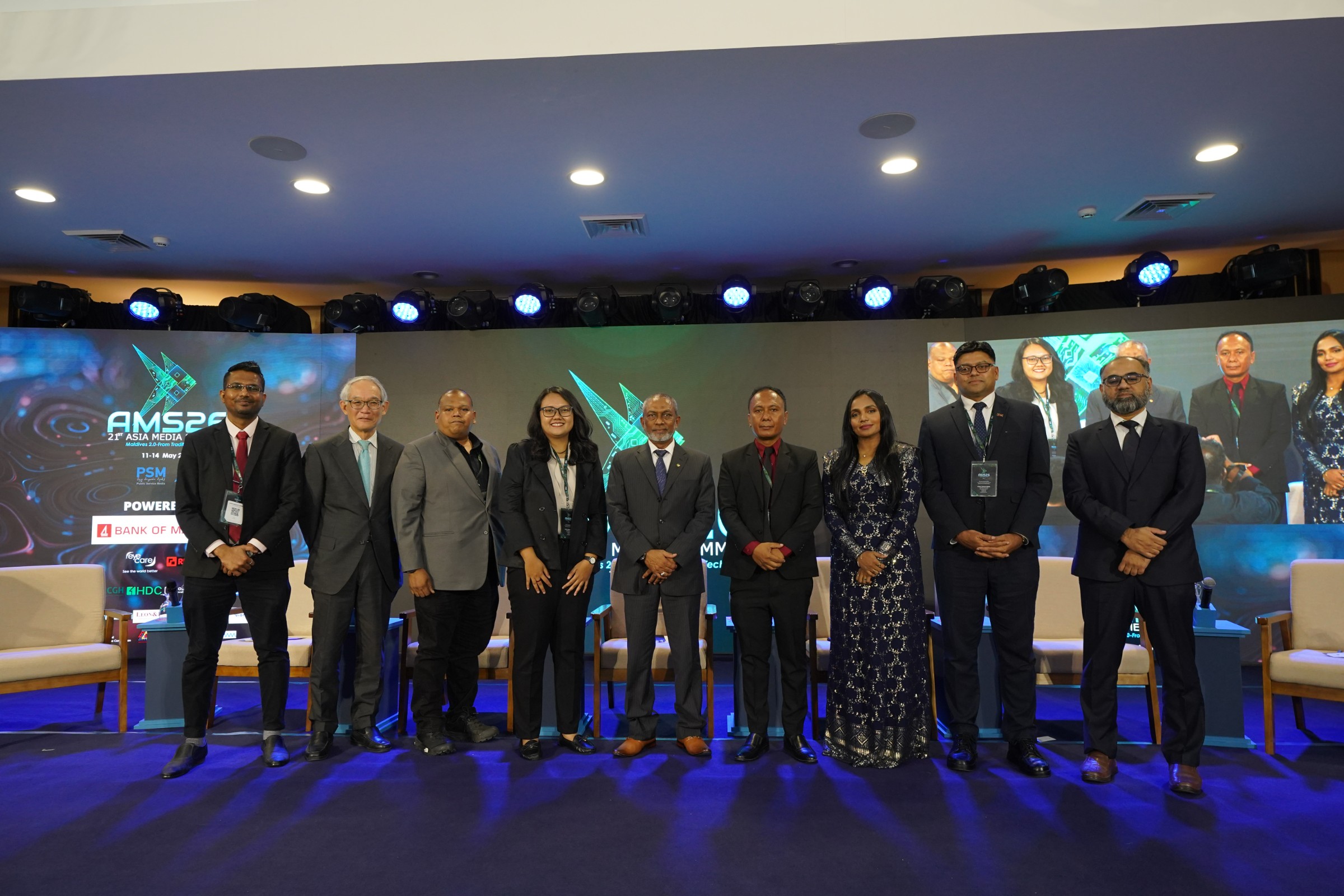
Suara Pulau-Pulau Kecil di Asia Media Summit ke-21
Isu pulau-pulau kecil menjadi salah satu perhatian dalam 21st Asia Media Summit melalui sesi pleno bertema “Voices from the Waves: Small Islands, Big Stories”. Sesi ini menyoroti pentingnya peran media dalam mengangkat suara komunitas di tingkat tapak, terutama masyarakat pulau kecil yang kerap terabaikan dalam krisis global. Asia Media Summit sendiri merupakan forum tahunan yang diselenggarakan oleh Asia-Pasific Institute for Broadcasting Development yang mempertemukan sekitar 350 peserta dari kalangan profesional media, penyiar, akademisi, dan pemerintah di kawasan Asia-Pasifik.
Dalam forum tersebut, WALHI menyampaikan kondisi krisis iklim di Indonesia, khususnya dampak yang dialami masyarakat di pulau-pulau kecil. WALHI juga mengangkat perjuangan warga Pulau Pari yang hingga kini terus menuntut keadilan iklim melalui gugatan iklim terhadap perusahaan penyumbang krisis iklim.
Ajakan WALHI untuk Rekan-Rekan Media
Forum tersebut menjadi penting karena media penyiaran memiliki posisi strategis dalam membangun kesadaran publik lintas negara. Media dapat membantu menyuarakan pengalaman masyarakat Pulau Pari ke panggung global, membangun solidaritas publik internasional, sekaligus memberikan tekanan reputasi kepada korporasi tinggi emisi yang selama ini berkontribusi terhadap krisis iklim.
Lebih jauh, pemberitaan media juga dapat memperlihatkan bahwa krisis iklim bukan sekadar persoalan lingkungan, tetapi persoalan keadilan. Ketika komunitas di pulau kecil kehilangan ruang hidup akibat kenaikan muka air laut, sementara keuntungan industri terus meningkat, maka terdapat ketimpangan yang harus dibongkar dan dipertanggungjawabkan.
Berkaitan dengan hal tersebut, WALHI mengajak rekan-rekan media untuk terus menjadi bagian dari gerakan masyarakat dengan menghadirkan suara-suara dari tingkat tapak ke ruang publik yang lebih luas. Media perlu menjadikan isu keadilan iklim, khususnya yang dialami komunitas di pulau-pulau kecil, sebagai agenda penting dalam kerja-kerja jurnalistik dan penyiaran.
Suara dari pulau kecil tidak boleh tenggelam. Karena dari pulau-pulau kecil itulah, dunia dapat melihat dengan jelas bagaimana krisis iklim telah berdampak secara nyata, dan mengapa perjuangan untuk keadilan iklim harus menjadi perjuangan bersama lintas batas negara.
___________________
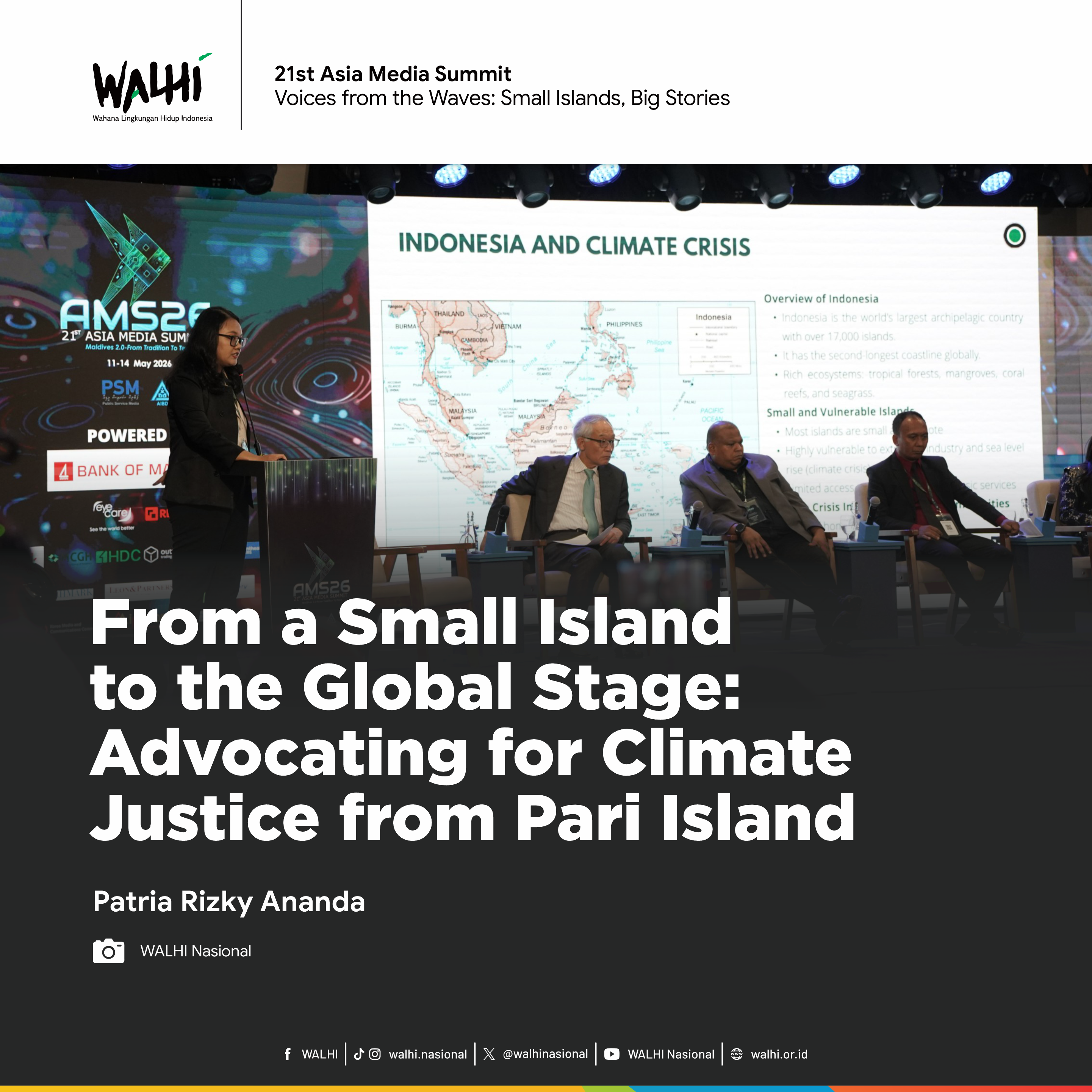
From a Small Island to the Global Stage: Advocating for Climate Justice from Pari Island
21st Asia Media Summit | Voices from the Waves: Small Islands, Big Stories
By: Patria Rizky Ananda, Climate and Global Issues Campaigner at WALHI
The climate crisis is not an issue that recognizes national borders. Emissions produced by large corporations in one region can bring disaster to communities living thousands of kilometers away. Its impacts cross geographical, political, and economic boundaries. Therefore, the climate crisis must be understood as a transboundary issue that requires global solidarity and a commitment to the groups most affected.
In various parts of the world, communities living on small islands are among the most vulnerable to the impacts of the climate crisis. Rising sea levels, coastal erosion, extreme weather, clean water crises, and the destruction of their living spaces and livelihoods are real threats they face every day. Yet, communities on small islands are not the ones responsible for the highest carbon emissions.
The Experience from Pari Island
The residents of Pari Island have also experienced this situation. In 2021, they experienced tidal flooding at least ten times, with four occurrences during the east wind season in July-August and six during the west wind season in November-December. The tidal flooding that occurred at the end of the year was the worst experienced by residents, with water levels reaching 50-150 cm.
As a result of the flooding, the community lost their income from tourism because many tourists canceled their visits. Tourism is one of the main sources of income for residents, through the rental of accommodations, diving equipment, and boats, as well as entrance fees to tourist sites and sales at local residents’ small shops. Since the tidal flooding that occurred throughout 2021, tourists have been flocking back in February 2022. This means that residents lost their income for approximately 3-4 months.
In addition, they are unable to access clean water from their wells because seawater has seeped in, making the water salty. As a result, residents have to spend more money to access clean water through water purification facilities. They also have to clean their homes of flood debris, which has forced them to stop going out to sea for 2-3 days.
Since the tidal flooding that occurred in 2021, residents have been experiencing increasingly frequent tidal flooding and extreme weather events. For the people of Pari Island, the climate crisis is no longer a future threat, but a reality that has damaged their living environment and had a devastating impact on them in recent years. This reality certainly hasn’t left the people of Pari Island sitting idly by; instead, they are fighting to demand their right to safety and to a good and healthy environment. They recognize that climate justice is also part of the right to a good and healthy environment. Therefore, holding accountable for those who have long profited at the expense of their rights is an action that must be taken.
In 2023, the residents of Pari Island took a historic step by filing a lawsuit against Holcim, one of the world’s top contributors to carbon emissions. This lawsuit has become a symbol of grassroots efforts to hold corporations accountable for the tangible impacts of the climate crisis they are experiencing. It also demonstrates that affected communities are not standing idly by in the face of global climate injustice.
Voices from Small Islands at the 21st Asia Media Summit
The issue of small islands was a key focus at the 21st Asia Media Summit during a plenary session titled “Voices from the Waves: Small Islands, Big Stories.” This session highlighted the importance of the media’s role in amplifying the voices of local communities, particularly small island communities that are often overlooked during global crises. The Asia Media Summit is an annual forum organized by the Asia-Pasific Institute for Broadcasting Development that brings together approximately 350 participants, including media professionals, broadcasters, academics, and government officials from the Asia-Pacific region.
At the forum, WALHI highlighted the climate crisis in Indonesia, particularly the impacts faced by communities on small islands. WALHI also highlighted the struggle of the residents of Pari Island, who continue to demand climate justice through climate lawsuits against companies contributing to the climate crisis.
WALHI’s Call to Media Colleagues
The forum is important because the media plays a strategic role in raising public awareness across national borders. The media can help bring the experiences of the people of Pari Island to the global stage, build international public solidarity, and apply reputational pressure on high-emission corporations that have long contributed to the climate crisis.
Furthermore, media coverage can also highlight that the climate crisis is not merely an environmental issue, but a matter of justice. When communities on small islands lose their living space due to rising sea levels, while corporate profits continue to rise, there is an inequality that must be addressed and held accountable.
In this regard, WALHI calls on our media partners to continue being part of the grassroots movement by amplifying voices from the local level to the broader public sphere. The media must prioritize climate justice issues—particularly those faced by communities on small islands—as a key focus on their journalistic and broadcasting work.
The voices of small islands must not be silenced. For it is from these small islands that the world can clearly see how the climate crisis is having a tangible impact, and why the fight for climate justice must be a shared struggle that transcends national borders.